RPM updates unlock new billing opportunities, helping providers boost revenue, improve engagement, and strengthen value-based care performance.
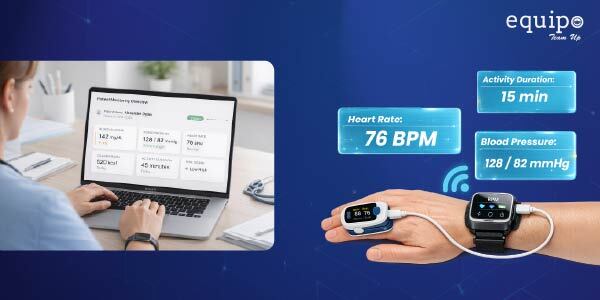
SOUTH PLAINFIELD, NJ, UNITED STATES, February 18, 2026 /EINPresswire.com/ — Remote Patient Monitoring (RPM) continues to play a central role in managing chronic conditions, reducing hospital readmissions, and supporting value-based care. The 2026 updates to Medicare reimbursement create measurable opportunities for providers who are equipped with a care management platform that can capture, track, and act on patient data efficiently. These updates allow practices to generate revenue for patient interactions that were previously uncompensated, while supporting better patient engagement and clinical oversight.
CPT codes 99445 and 99470 expand billing eligibility. Code 99445 covers 2–15 days of patient data transmission in a 30-day period, while code 99470 reimburses 10–19 minutes of clinical management. These thresholds align with real-world patient behaviors and allow practices to capture revenue for shorter, clinically meaningful engagements that were previously non-billable.
Financial outcomes are significant. Clinics that track and bill these interactions have reported a 12–13% increase in reimbursable revenue, without increasing patient volume. Engagement statistics indicate that RPM programs can maintain adherence rates of 75–97%, and clinical data shows 25–35% reductions in hospital readmissions among chronic disease patients.
Operational efficiency is essential. A care management platform should automatically track transmission days, log clinical interaction time, integrate with electronic health records, and support correct coding for each encounter. Platforms that streamline these processes reduce administrative burden, minimize claim denials, and ensure practices capture all reimbursable RPM activities.
Patient engagement remains a critical factor. Platforms that simplify device connectivity, automate data transmission, provide intuitive interfaces, and generate real-time alerts help sustain adherence. These features allow care teams to respond promptly to clinical signals, improving patient outcomes while maximizing revenue opportunities.
Value-based care performance depends on consistent monitoring and timely interventions. Practices that leverage RPM platforms to capture all billable interactions, maintain patient engagement, and integrate workflows into daily clinical operations can improve care quality while increasing financial predictability. RPM programs become not just a clinical tool, but a measurable contributor to a provider’s overall performance in a value-based care model.
Providers with platforms that align RPM workflows, billing, and patient engagement will gain operational consistency, improved outcomes, and stronger financial performance. The 2026 code updates create clear, measurable opportunities, and practices that integrate technology effectively can capture the full clinical and economic value of RPM services.
Prince Mamman
Connect Care
email us here
Visit us on social media:
LinkedIn
Instagram
Facebook
Legal Disclaimer:
EIN Presswire provides this news content “as is” without warranty of any kind. We do not accept any responsibility or liability
for the accuracy, content, images, videos, licenses, completeness, legality, or reliability of the information contained in this
article. If you have any complaints or copyright issues related to this article, kindly contact the author above.